Τελευταία Νέα
Διεθνή

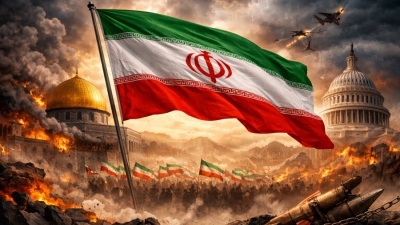
Britain issues shock warning to the United States: Beware asymmetric retaliation, Iran signals heavy and bloody reprisals

Britain issues shock warning to the United States: Beware asymmetric retaliation, Iran signals heavy and bloody reprisals
Iran’s new strategy does not merely aim for a symbolic reaction, but for tangible losses for American forces and their interests in the broader region

The tension between Tehran and Washington is entering a new, more dangerous phase.
Iranian officials now openly warn that, in the event of an American attack, the response will not be “measured” as in the past, but escalating and aimed at imposing a substantial cost on American forces and infrastructure in the region.
The Chief of Staff of the Armed Forces of Iran, Abdolrahim Mousavi, stated that until recently the strategy of the Islamic Republic was to prevent a generalized conflict.
“Our strategy was to avoid escalation,” he said, adding, however, that “the behavior of the United States forced us to change our approach.”
The message was clear: if Washington “makes a mistake,” the response will be heavy and bloody.

iran_13_2_1.jpg
Revision of military doctrine

According to a source from the Iranian regime who spoke to the Financial Times, Tehran has already readjusted its military doctrine toward the United States.
The new strategy does not simply aim at a symbolic reaction, but at tangible losses for American forces and their interests in the broader region.
The same source stressed that Iran does not seek war and hopes that the United States–Iran talks in Geneva will open the way for a new nuclear agreement.
However, the source underlined that the country “would prefer to fight rather than capitulate” to the President of the United States, Donald Trump.
In contrast to previous responses, such as the preannounced missile attacks on American bases in Iraq in 2020 and in Qatar last year, Tehran implies that this time there will be no limited intensity “war game.”
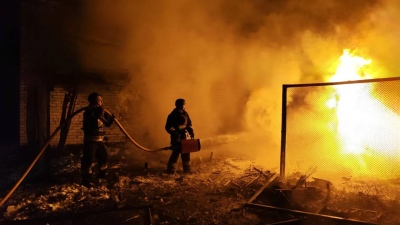
Possible targets could include American bases in the Gulf, warships, and even the critical maritime route of the Strait of Hormuz.
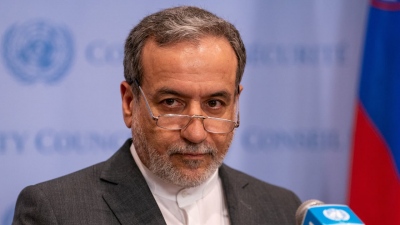
The spokesperson of the Iranian Ministry of Foreign Affairs, Esmail Baghaei, made it clear that “there is no such thing as a limited attack” and that the response will be “fierce.”
iran_1_8_1.jpg

The military imbalance and the limits of deterrence

Despite the rhetorical threats, analysts outside Iran point to the clear military imbalance.
The United States has deployed its largest military force in the Middle East since the invasion of Iraq in 2003, while the recent 12 day conflict between Iran and Israel highlighted the vulnerabilities of Iranian defense.
American fighter jets and long range strike capabilities could, according to experts, severely damage the country’s key military and economic infrastructure within a few days.
However, Tehran believes it possesses asymmetric tools that can offset the technological superiority of its adversaries.
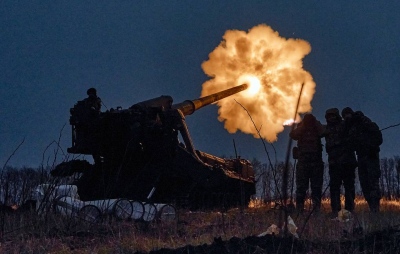
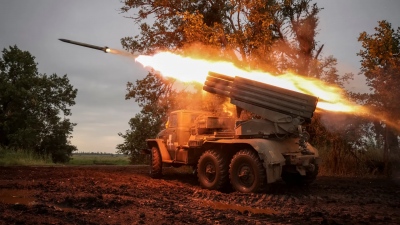
The massive use of ballistic missiles and drones constitutes the main pillar of this strategy.
During the conflict of June with Israel, hundreds of Iranian projectiles were launched, with dozens penetrating air defense systems.
Tehran’s message is that even if it does not prevail conventionally, it can impose a significant cost.
iran_12_1_3.jpg

The role of the Strait of Hormuz

Particular concern is caused by the possibility of disrupting navigation in the Strait of Hormuz, one of the most important global energy arteries, through which a large percentage of the world’s seaborne oil trade passes.
The Revolutionary Guards have already conducted exercises involving the temporary closure of parts of the region.
Former intelligence adviser to the British cabinet, Lynette Nusbacher, warned that Iranian threats should be taken seriously.
“The Iranian national security system is dangerous, but it is not irrational,” she noted, emphasizing that Tehran operates with calculation and strategic intent.

iran_14_2_2.jpg

The shadow of Soleimani and the shift in stance

The assassination of Iranian General Qassem Soleimani by the United States in 2020 marked a turning point.
At that time, the Iranian response, a missile attack on a base in Iraq, had been carefully designed so as not to cause American casualties.
Today, however, figures close to the regime argue that this “measured” stance was interpreted as weakness.
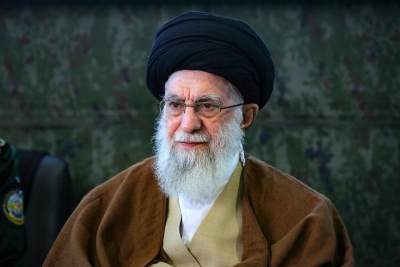
Hamzeh Safavi, son of a senior military adviser to Supreme Leader Ali Khamenei, stated that Iran “will seek this time to impose a cost” and will no longer differentiate between the United States and Israel in the event of conflict.
This statement reinforces the sense that Tehran now views Washington and Tel Aviv as a unified strategic front.

iran_15_1_1.jpg
Diplomacy or conflict?

Trump, for his part, accuses Iran of “dark ambitions” and insists that Tehran must explicitly declare that it will never acquire a nuclear weapon.
The Iranian leadership maintains that its nuclear program is exclusively peaceful in nature and that it has the right to enrich uranium under the Non Proliferation Treaty.
Mutual distrust and the red lines of both sides render the environment extremely fragile.
On the one hand, Washington демонстрates military power and deterrent resolve.
On the other, Tehran declares that it will not repeat the strategy of “controlled response.”

diego_garcia_1_1.jpg
A dangerous crossroads

The current landscape strongly recalls previous periods of crisis, but with one essential difference, the rhetoric of the Iranian leadership is more aggressive and less willing to limit escalation.
If the talks fail and a military strike occurs, the chain of reprisals could spiral out of control.
In a region already burdened by multiple fronts and fragile balances, an open United States–Iran conflict would have not only military consequences, but also energy, economic, and geopolitical repercussions on a global scale.
The question is no longer whether tension exists, it is a given.
The critical question is whether the two sides will choose the path of negotiation or test the limits of deterrence, risking a conflict unlikely to remain contained.

iran_2_5_1.webp
Two track rhetoric from Trump

In his State of the Union address on 24/2/2026, the American President Donald Trump openly warned of a possible bombing of Iran, while leaving room for diplomatic de escalation, on the condition that Tehran commit to never developing nuclear weapons.
“They have been warned not to make any future attempt to rebuild their weapons program, including nuclear,” said Trump, emphasizing that he prefers to “solve the problem through diplomacy,” while pledging to “never allow the world’s leading sponsor of terrorism to acquire a nuclear weapon.”
The speech offered limited indications regarding the President’s strategic reasoning on war, while the United States continues to amass forces in the Middle East at a pace not seen since the invasion of Iraq in 2003.
Trump’s strategy appears to be based on the logic of limited aerial pressure as a coercive tool, repeating accusations against Tehran, such as the suppression of protesters with more than 30,000 dead and the development of ballistic missiles that “will soon reach the United States.”
This “two track” rhetoric, threat of war and race for a diplomatic solution, may appear strategically flexible, yet it conceals a significant danger, it grants the United States the ability to shift from peace to war with only a minor change in circumstances or in the “interpretation” of Iran’s actions.
Moreover, the promised benefits of military action, “great victory,” “complete destruction of the nuclear program,” “elimination of the threat,” are not accompanied by clear strategic plans for what would follow.

trump_10_1.webp
Policy centered on the threat

Experience from previous wars shows that military intervention often leads to prolonged instability, losses, and unpredictable consequences, a reality confirmed by numerous international conflicts in recent years.
This rhetoric of escalation suggests that even if Iran does not seek a nuclear arsenal, the reactions and consequences of a military attack could extend beyond the narrow limits of the dispute, affecting the entire region and triggering a broader regional crisis.
The message emanating from Washington is contradictory, Washington states that it seeks a diplomatic solution, while simultaneously concentrating military power and issuing threats of war.
This strategy, beyond political maneuvering and domestic political considerations, creates a dangerous precedent for the international order and international law.
When a superpower with immense military capability repeatedly chooses to issue threats of military action without a clear and legitimate basis, the result is not only a decline in trust among other states, but also the reinforcement of uncertainty and instability in international relations.

naval_1_2_1.webp
Air power, powerful weapon, limited political impact

Meanwhile, the current concentration of American air and naval forces in the region around Iran, accompanied by public warnings, strongly resembles the “gunboat diplomacy” of the 21st century, military power is used not only for deterrence, but also as a tool of pressure for the signing of agreements.
Trump has even discussed the possibility of limited air raids or broader attacks on “regime facilities,” including strategic targets such as Supreme Leader Ayatollah Khamenei and his son Mojtaba.

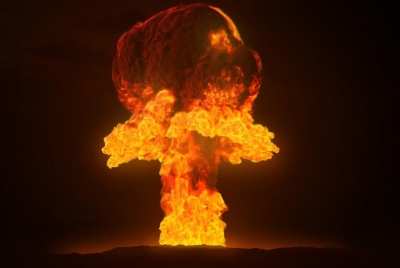
bomb_1_1.webp
However, the assumption that air power can compel a state such as Iran to submit or collapse is highly problematic.
Trump’s reasoning is based on a familiar but flawed strategic premise, that aerial strikes can politically weaken an adversary.
This error has been repeatedly observed throughout history, from the air power theories of Italian General Giulio Douhet in the early 20th century to the campaign Operation Rolling Thunder in Vietnam, 1965, 1968.
In the case of Vietnam, sustained bombing did not force North Vietnam to retreat, but instead strengthened the government’s resolve and strategic adaptation.
Similarly, during the Gulf War in 1991, air strikes were not decisive without the ground invasion.
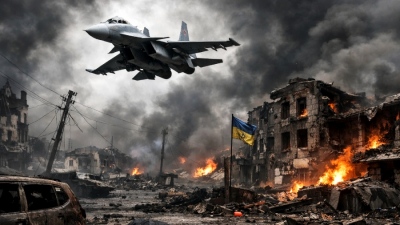
More recently, the Russian campaign of air and missile strikes in Ukraine demonstrated that the destruction of infrastructure and military targets, without the threat of territorial control, rarely leads to capitulation.
As military analysts often note, addressing the United States, aerial bombardments and missile strikes spread fire, but do not deliver victory.


www.bankingnews.gr

Ρoή Ειδήσεων

Σχόλια αναγνωστών

Δείτε επίσης